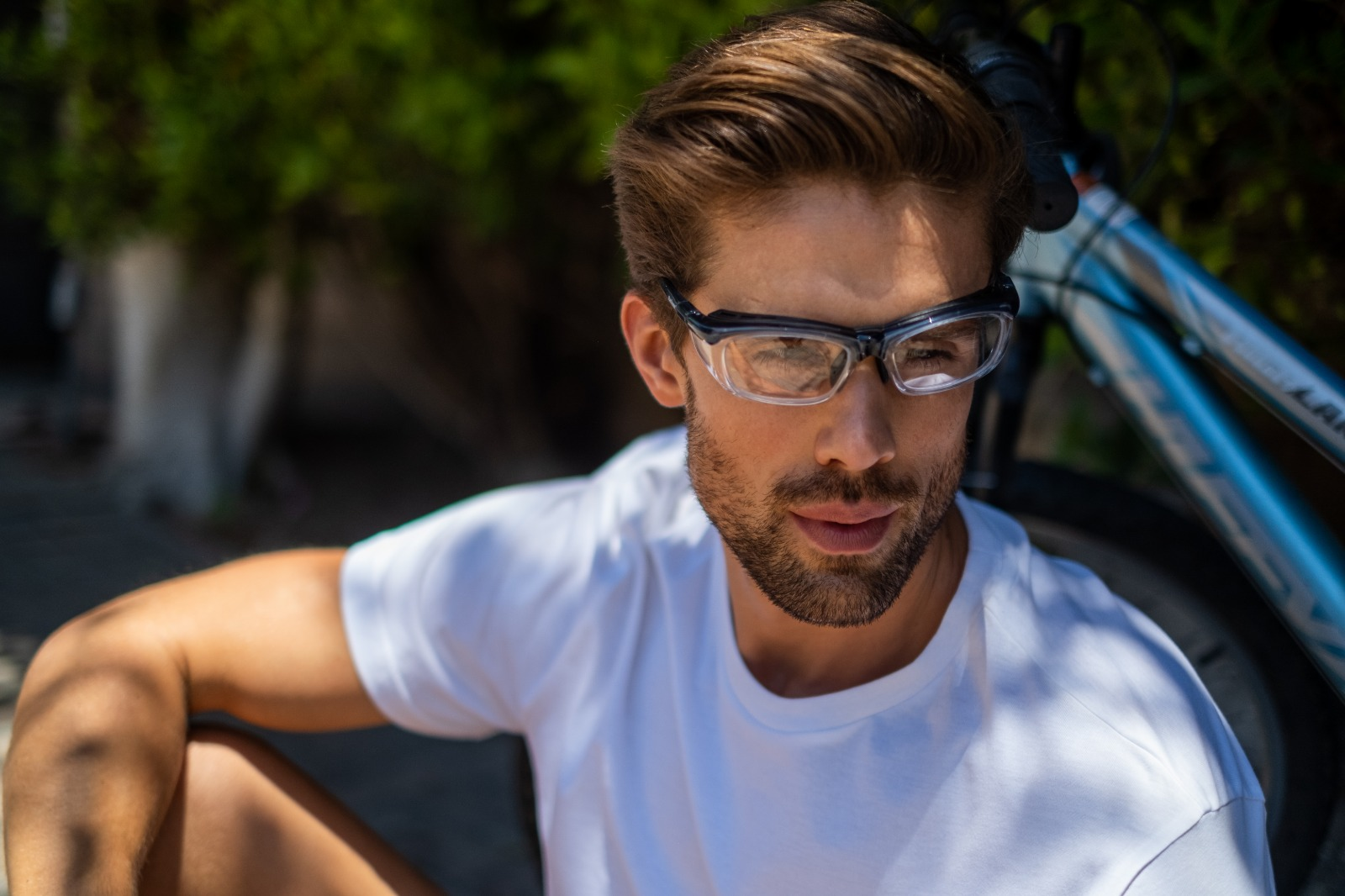
Workplace safety begins with a clear vision and reliable protection. For professionals in industrial, medical, or construction sectors, standard eyewear is insufficient against high-velocity impacts or chemical splashes. Understanding the rigorous testing behind prescription safety glasses ensures that you are selecting equipment designed to withstand specific environmental hazards.
Safety compliance is not merely a recommendation but a legal requirement under OSHA guidelines. When an employee requires vision correction, their eyewear must meet these industrial benchmarks to be classified as true safety gear. Choosing the right pair involves looking for specific markings that indicate the frame and lenses have passed these standardized evaluations.
The High-Impact Testing Behind Prescription Safety Glasses
To earn a safety rating, eyewear must undergo a series of tests designed to simulate real-world accidents. The most critical evaluation is the high-mass impact test, where a pointed one-pound projectile is dropped from fifty inches onto the lens. This determines if the frame can hold the lens securely without any part touching the eye.
Another essential procedure is the high-velocity impact test. In this scenario, a quarter-inch steel ball is shot at the lens at a speed of 150 feet per second. For the product to pass, no contact is permitted between the lens and the eye, and no fragments can detach from the inner surface of the frame.
These tests are performed on both the lenses and the frames as a complete unit. If you are searching for the best prescription safety glasses, you must ensure they carry the “Z87+” mark. This plus sign specifically denotes that the eyewear has passed the high-impact testing tier rather than just basic requirements.
Understanding Lens Material Durability
Modern safety lenses are typically crafted from polycarbonate or Trivex. Polycarbonate is favored for its natural UV protection and incredible impact resistance, making it the industry standard. These materials are tested for optical clarity to ensure that the user does not experience distortion or prismatic effects during long shifts.
Lenses also undergo testing for chemical resistance and flammability. In environments where hazardous substances are present, the material must not degrade or catch fire when exposed to specific chemicals. This level of scrutiny ensures that the wearer remains protected even in volatile industrial settings.
Scratch resistance is another factor evaluated during manufacturing. While no lens is completely scratch-proof, high-quality coatings are tested for their ability to maintain clarity over time. This is particularly important for those who work in dusty or abrasive environments where vision can quickly become obscured.
Frame Integrity and Lateral Protection
A safety lens is only as effective as the frame that holds it. Frames are tested for their ability to resist heat and prevent the entry of flying particles from the sides. Side shields are often integrated into the design or added as permanent attachments to provide 180-degree protection for the wearer.
For those in specialized roles, Women’s Prescription Safety Glasses are designed with these same rigorous standards but tailored for different facial structures. Proper fit is a safety requirement because gaps between the frame and the face can allow debris to bypass the protective barrier. A secure fit ensures the glasses remain in place during physical labor.
OSHA Compliance and Workplace Liability
Employers are responsible for ensuring that all protective gear meets current ANSI standards. If an injury occurs and the eyewear is found to be non-compliant, the organization faces significant liability and fines. Using certified prescription safety glasses mitigates these risks by providing documented proof of protection.
It is important to note that sports-specific eyewear and industrial safety glasses are tested differently. Industrial standards are often more stringent regarding chemical exposure and long-term durability. Understanding how sports glasses can prevent eye injuries in competitive sports provides perspective on why specialized gear is necessary for different activities.
The Role of Anti-Fog Technology
Fogging is one of the most common reasons workers remove their safety gear, which leads to avoidable accidents. Testing procedures now include evaluations for anti-fog coatings to see how they perform in high-humidity environments. A lens that stays clear during temperature transitions is a vital safety feature.
Anti-fog testing involves placing the lenses over a steam source to measure how long it takes for moisture to obscure the vision. High-performance coatings can prevent fogging for several minutes, allowing the worker to complete a task without needing to wipe their glasses. This technology is a standard feature in the best prescription safety glasses available today.
Specialized Protection for Different Hazards
Some environments require protection beyond impact resistance, such as those involving radiation or lasers. ANSI Z87.1 includes sub-categories for these hazards, marked with letters like “R” for IR radiation or “L” for visible light filters. Users must match the rating on their prescription safety glasses to the specific wavelengths present in their workspace.
Electricians and utility workers often require non-conductive frames, also known as dielectric glasses. These are tested to ensure they do not contain metal components that could arc when working near high-voltage equipment. Choosing the correct frame material is just as important as the lens for these applications.
For those working outdoors, the “S” mark indicates a special lens tint. These are tested for their ability to filter out harmful sun rays while maintaining color recognition. This is critical for workers who need to distinguish between colored wires or safety signals while wearing tinted protective gear.
Identifying Authentic Safety Markings
Authentic safety eyewear will always have permanent markings that cannot be easily removed. To verify your gear, check for the following indicators:
- Frame Markings: Look for the manufacturer’s mark and the “Z87” or “Z87+” designation on the inside of the temples or the bridge.
- Lens Etching: Every lens must feature a small laser-etched logo or “Z87” mark, usually in the upper corner or near the edge.
- Specialty Codes: Look for letters like “D” for splash protection, “R” for IR filters, or “V” for photochromic lenses to match your specific environmental hazards.
When purchasing Women’s Prescription Safety Glasses or any specialized protective gear, verifying these marks is the first step in quality control. It provides the user with the confidence that their eyewear has undergone rigorous testing. Investing in certified equipment is the most effective way to prevent permanent vision loss.
Maintaining the Integrity of Safety Gear
Even the highest quality safety glasses require proper maintenance to remain effective. Lenses should be cleaned with microfiber cloths and specific lens cleaners rather than abrasive paper towels. Scratches can weaken the structural integrity of the polycarbonate, making it more susceptible to breaking under impact.
Store your eyewear in a hard case when not in use to prevent the frames from becoming bent or misaligned. A warped frame can cause the lenses to sit at an incorrect angle, which may lead to optical distortion. Regular maintenance ensures that the prescription safety glasses continue to meet the standards they were originally tested for.
Finally, remember that safety standards are updated periodically. ANSI typically reviews its protocols every few years to account for new materials and workplace hazards. Staying informed about these changes ensures that your personal protective equipment remains at the forefront of safety technology.
About the Author