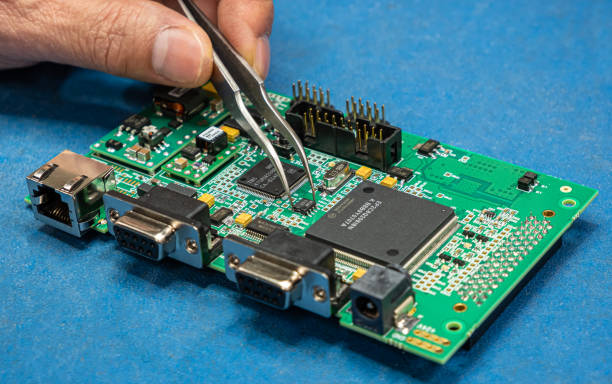
The landscape of electronics manufacturing has undergone a radical transformation over the last decade, moving from simple single-layer boards to incredibly complex, multi-functional systems. For engineers and product developers, understanding the nuances of printed circuit board (PCB) fabrication and assembly is no longer just a technical requirement—it is a strategic advantage. As devices become smaller, faster, and more integrated, the choice of a manufacturing partner and the specific technologies employed can determine the success or failure of a product in a competitive market.
When searching for a reliable partner, many industry leaders turn to a Global Well PCBA to handle their most demanding projects. Choosing a manufacturer that offers a one-stop turnkey solution is often the most effective way to streamline production. This approach integrates PCB design, component sourcing, and final assembly into a single workflow, significantly reducing the risk of communication errors and supply chain delays. By consolidating these services, companies can ensure that their technical specifications are met with precision while maintaining a faster time-to-market for their electronic innovations.
Understanding the Core of PCB Fabrication
PCB fabrication is the foundational process of creating the physical board that will eventually house electronic components. It begins with a detailed design, usually created using CAD software, which is then translated into a series of manufacturing steps. The complexity of this process depends heavily on the board’s requirements, such as the number of layers, the materials used, and the precision of the traces.
Modern fabrication techniques have evolved to support high-density interconnect (HDI) designs. HDI PCBs feature finer lines and spaces, smaller vias, and higher connection pad densities. These boards are essential for modern smartphones, tablets, and wearable technology, where space is at a premium. A high-quality fabrication process ensures that these minute details are executed perfectly, preventing short circuits and ensuring long-term reliability.
The fabrication process also involves several critical stages, including substrate preparation, photoresist application, etching, and drilling. Each of these steps must be performed in a cleanroom environment to prevent contamination from dust and other particles. For instance, even a single speck of dust can cause a break in a trace that is only a few microns wide, leading to a faulty board. This is why top-tier manufacturers invest heavily in state-of-the-art cleanroom facilities and automated equipment.
The Rise of Advanced PCB Solutions
As industries like telecommunications and robotics push the boundaries of what is possible, standard rigid PCBs are often no longer sufficient. This has led to the rise of advanced solutions such as Rigid-Flex and High-Frequency PCBs.
Rigid-Flex PCBs: The Best of Both Worlds
Rigid-Flex boards combine the stability of rigid PCBs with the flexibility of flexible circuits. These boards consist of multiple layers of flexible circuit substrates attached to one or more rigid boards. This hybrid construction allows the board to be folded or bent to fit into tight spaces, which is invaluable in applications like medical devices, aerospace technology, and compact consumer electronics. Because they eliminate the need for many connectors and cables, Rigid-Flex PCBs also improve signal integrity and reduce the overall weight of the device.
The manufacturing of Rigid-Flex boards is significantly more complex than that of standard rigid boards. It requires specialized materials and careful alignment of the different layers. The flexible portions are typically made of polyimide, which can withstand high temperatures and repeated bending without cracking. The rigid sections provide the necessary support for mounting components and ensuring structural integrity. This combination makes Rigid-Flex PCBs the ideal choice for dynamic applications where the board must move or bend during operation.
High-Frequency PCBs for High-Speed Data
In the era of 5G and high-speed data transmission, High-Frequency PCBs have become indispensable. These boards are designed to handle signals in the gigahertz range with minimal loss. They require specialized materials, such as Rogers or Teflon-based substrates, which have a low dielectric constant and low dissipation factor. Fabricating these boards requires extreme precision in trace geometry and impedance control to ensure that signals remain clear and undistorted over long distances.
High-frequency designs also require careful attention to electromagnetic interference (EMI) and signal crosstalk. Engineers must use advanced simulation tools to model the behavior of the board at high frequencies and optimize the layout to minimize these issues. This often involves the use of specialized grounding techniques, shielding, and careful placement of components to ensure that high-speed signals do not interfere with other parts of the circuit.
The Intricacies of PCB Assembly (PCBA)
Once the fabrication of the board is complete, the next critical phase is PCB Assembly, or PCBA. This is the process of soldering electronic components onto the fabricated board. There are two primary methods used in modern assembly: Surface Mount Technology (SMT) and Through-Hole Technology (THT).
SMT is the most common method for modern electronics. It involves placing components directly onto the surface of the PCB. This allows for higher component density and smaller board sizes. On the other hand, THT involves inserting component leads into pre-drilled holes in the board. While slower and more labor-intensive than SMT, THT provides a much stronger physical bond, making it the preferred choice for components that will be subject to mechanical stress, such as connectors and heavy power components.
A professional assembly service will often use a combination of both methods, known as mixed-technology assembly, to achieve the best balance of size, performance, and durability. Advanced assembly also includes rigorous testing phases, such as Automated Optical Inspection (AOI), X-ray inspection for BGA components, and In-Circuit Testing (ICT), to ensure every board meets the highest quality standards.
The assembly process also includes the application of solder paste, component placement, and reflow soldering. Each of these steps must be carefully controlled to ensure a high-quality result. For example, the amount of solder paste applied must be precisely measured to prevent solder bridges or cold joints. Similarly, the temperature profile of the reflow oven must be carefully managed to ensure that the solder melts and flows correctly without damaging the components or the board.
Specialized Applications in Key Industries
The requirements for PCB fabrication and assembly vary significantly depending on the target industry. Two of the most demanding sectors today are telecommunications and robotics.
Telecommunications: Powering the 5G Revolution
The telecommunications industry requires PCBs that can handle massive amounts of data at incredible speeds. From base stations to routers and switches, these devices rely on multi-layer boards with advanced thermal management and high-frequency capabilities. The shift to 5G has further increased the demand for precision, as even the slightest deviation in trace width can lead to significant signal degradation. Manufacturers must provide boards that can operate reliably in diverse environments, from climate-controlled data centers to exposed outdoor installations.
In addition to high-speed data handling, telecommunications PCBs often need to manage significant power levels. This requires the use of heavy copper layers and advanced thermal vias to dissipate heat away from critical components. Thermal management is a major concern in telecommunications equipment, as overheating can lead to reduced performance and premature failure. Manufacturers use a variety of techniques, such as metal-core PCBs and heat sinks, to ensure that these devices remain cool even under heavy loads.
Robotics: Precision and Durability
In robotics, PCBs are the “brain” and “nervous system” of the machine. They must manage complex motor controls, process sensor data in real-time, and handle power distribution—all while being subjected to constant vibration and movement. This makes durability a top priority. Rigid-Flex solutions are frequently used in robotics to allow for movement in joints and limbs without the risk of wire fatigue. Additionally, high-reliability assembly techniques are used to ensure that components remain securely attached even under intense mechanical stress.
Robotics PCBs also need to be highly integrated to fit into the compact spaces of modern robots. This often involves the use of multi-layer boards and HDI technology to pack more functionality into a smaller area. Furthermore, the use of specialized connectors and cables is essential to ensure reliable communication between the different parts of the robot. Manufacturers must also consider the environmental conditions in which the robot will operate, such as extreme temperatures, moisture, and chemical exposure, and choose materials and coatings that can withstand these challenges.
The Importance of Component Sourcing
A common bottleneck in the manufacturing process is the procurement of electronic components. With global supply chains often facing volatility, having a partner with a robust sourcing network is vital. A turnkey provider typically maintains a large inventory of common parts and has established relationships with global distributors to secure hard-to-find components.
Quality control in sourcing is equally important. The market is unfortunately flooded with counterfeit or substandard components that can lead to premature failure of the final product. A reputable manufacturer will have a strict vendor qualification process and perform incoming quality control (IQC) to verify the authenticity and functionality of every part before it reaches the assembly line.
In addition to sourcing components, a turnkey provider can also help with component obsolescence management. As technology advances, many components become obsolete and are no longer manufactured. A proactive manufacturer will monitor the lifecycle of the components used in your design and suggest alternatives or help you secure a lifetime supply of critical parts before they become unavailable. This is particularly important for products with long lifecycles, such as industrial equipment and medical devices.
Choosing the Right Manufacturing Partner
When selecting a partner for your next project, look beyond just the price. Consider their technical expertise, the range of services they offer, and their track record in your specific industry. A manufacturer that can provide a seamless transition from prototyping to mass production will save you significant time and money in the long run.
For many businesses, working with an experienced team like the one at globalwellpcba.com provides the peace of mind that comes from knowing every detail of the manufacturing process is being handled by experts. Whether you need a simple double-sided board or a complex 40-layer HDI system, the right partner will work closely with you to optimize your design for manufacturability (DFM) and ensure the highest possible yield.
A good partner will also provide excellent customer support and communication throughout the project. They should be able to provide regular updates on the status of your order and be responsive to any questions or concerns you may have. Furthermore, they should be willing to work with you to solve any technical challenges that may arise during the manufacturing process. This collaborative approach is essential for the success of complex electronics projects.
Future Trends in PCB Technology
As we look toward the future, several trends are set to further revolutionize the PCB industry. One is the increasing use of Artificial Intelligence (AI) in both design and manufacturing. AI-driven design tools can optimize trace routing and thermal management more efficiently than human engineers alone, while AI-powered inspection systems can detect defects with unprecedented accuracy.
Another trend is the push toward more sustainable manufacturing practices. This includes the use of halogen-free materials, lead-free soldering, and more efficient recycling processes for scrap boards and components. As environmental regulations become stricter, manufacturers who prioritize sustainability will be better positioned to serve the global market.
The development of “smart” PCBs with embedded sensors and components is opening up new possibilities for the Internet of Things (IoT). These boards can monitor their own health and performance, providing valuable data that can be used to predict failures and schedule maintenance before a problem occurs. This self-diagnostic capability will be invaluable in critical applications like aerospace and medical devices.
Finally, the use of 3D printing in PCB manufacturing is also gaining traction. While still in its early stages, 3D printing offers the potential to create complex, multi-layer boards with integrated components in a single step. This could significantly reduce the lead time and cost of prototyping and allow for even more innovative designs.
Conclusion
Navigating the world of PCB fabrication and assembly requires a deep understanding of both traditional techniques and cutting-edge innovations. By focusing on advanced solutions like Rigid-Flex and High-Frequency PCBs, and by partnering with a reliable turnkey provider, businesses can overcome the challenges of modern electronics manufacturing. Whether you are developing the next generation of telecommunications equipment or a revolutionary new robot, the quality of your PCBs will be the foundation of your success.
Informative, simple, and high-quality manufacturing processes are the keys to bringing complex electronic visions to life. By staying informed about the latest trends and maintaining a focus on precision and reliability, you can ensure that your products not only meet but exceed the expectations of your customers in an ever-evolving technological landscape.
About the Author