In the demanding world of commercial cleaning, the efficiency and longevity of your floor cleaning machines are paramount. These powerful pieces of equipment, from robust scrubbers to versatile sweepers, represent a significant investment for any business. Ensuring they operate at peak performance, day in and day out, not only guarantees pristine floors but also safeguards your bottom line by minimizing costly repairs and unexpected downtime. This comprehensive guide will delve into essential maintenance practices, operational tips, and troubleshooting advice to help you extend the life of your commercial floor cleaning machines.
Why Regular Maintenance is Crucial for Your Cleaning Equipment
Just like any other complex machinery, commercial floor cleaning equipment requires consistent care to maintain its effectiveness. Neglecting routine maintenance can lead to a cascade of problems, including reduced cleaning performance, increased energy consumption, frequent breakdowns, and ultimately, a shorter operational lifespan for your machines. Conversely, a proactive maintenance approach offers numerous benefits:
•Extended Equipment Lifespan: Regular checks and timely servicing prevent minor issues from escalating into major, expensive problems, thereby prolonging the life of your machinery.
•Optimal Cleaning Performance: Well-maintained machines clean more effectively, ensuring a higher standard of cleanliness and hygiene for your facility.
•Reduced Operational Costs: By preventing breakdowns and optimizing efficiency, you save on repair costs, energy consumption, and the need for premature equipment replacement.
•Enhanced Safety: Properly functioning equipment is safer to operate, reducing the risk of accidents and injuries in the workplace.
•Consistent Results: Regular maintenance ensures that your machines deliver consistent, high-quality cleaning results every time, contributing to a professional appearance for your premises.
The global floor cleaning equipment market is projected to reach USD 27.56 billion by 2033 , underscoring the significant value businesses place on these essential tools. Protecting this investment through diligent maintenance is not just good practice; it’s a strategic business decision.
Understanding Your Commercial Floor Cleaning Machines
Commercial floor cleaning encompasses a diverse range of equipment, each designed for specific tasks and floor types. Familiarity with these machines and their functions is the first step towards effective maintenance. The primary types include:
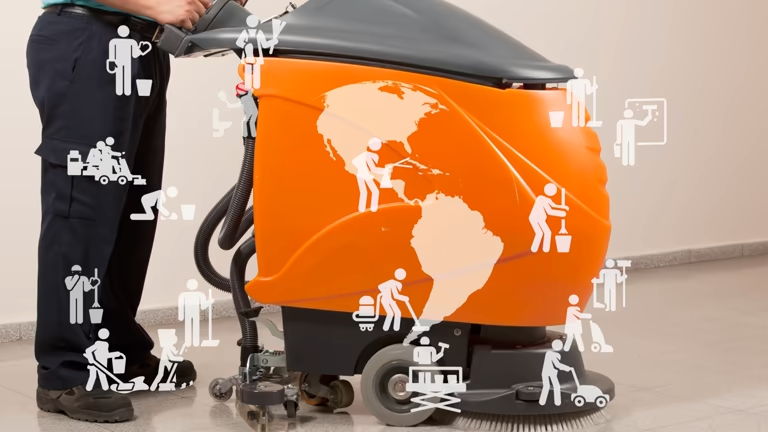
•Commercial Floor Scrubbers: These machines are designed for deep cleaning hard surfaces. They apply cleaning solution, scrub the floor with brushes, and then vacuum up the dirty water, leaving floors clean and dry. They are an effective investment for managing large commercial facilities, enhancing worker productivity, lowering labor costs, and improving safety by reducing slip and fall hazards.
•Sweeper-Scrubbers: Ideal for larger areas, these machines combine sweeping and scrubbing functions, first collecting debris and then deep cleaning the floor in a single pass.
•Mechanized Mops: While simpler, these still offer more efficiency than traditional mopping for smaller areas and quick cleanups.
•Robotic Floor Scrubbers: These autonomous machines handle routine cleaning tasks, offering efficiency and consistency with minimal human intervention.
•Industrial Vacuums: Essential for daily upkeep, these come in various forms, including wet/dry vacuums and specialized models for different types of debris.
Choosing the right machine for the job is crucial. Factors such as the type of floor (hard floors, carpets), the size of the area, and the required cleaning intensity all influence the selection. For instance, hard floors like concrete, tile, and wood require specific attachments, while carpets need dedicated carpet cleaning tools. A wider cleaning path can significantly enhance productivity and efficiency by covering large areas more quickly, making it ideal for commercial environments.
Essential Daily Maintenance Practices
Daily maintenance is the cornerstone of a long-lasting and efficient commercial floor cleaning machine. These simple steps, performed after each use, can prevent the buildup of grime, reduce wear and tear, and identify potential issues before they become serious problems.
1. Draining and Rinsing Tanks
This is perhaps the most critical daily task. After every use, both the solution and recovery tanks must be completely emptied and thoroughly rinsed. This prevents:
•Odor and Bacteria Buildup: Stagnant dirty water is a breeding ground for bacteria and can lead to unpleasant odors.
•Chemical Residue: Leftover cleaning solutions can corrode tank components over time.
•Clogging: Sediment and debris can accumulate, leading to blockages in hoses and filters.
Procedure:
•Completely empty both the solution and recovery tanks.
•Rinse them thoroughly with clean water until all chemical residue and debris are removed.
•Allow the tanks to air dry as much as possible to prevent mold and mildew growth.
•Inspect for any signs of damage or leaks.
2. Cleaning Brushes, Squeegees, and Pad Drivers
The brushes, squeegees, and pad drivers are the primary contact points with the floor, and their condition directly impacts cleaning effectiveness. A quick clean at the end of each day makes a significant difference.
Procedure:
•Remove any debris, hair, or string that may be tangled in the brushes or stuck to the squeegees.
•Inspect brushes for wear and tear. Worn brushes are less effective and can damage floors.
•Check squeegee blades for nicks, tears, or hardening. Damaged squeegees will leave streaks or puddles.
•Clean these components with the appropriate solution.
•Store brushes and squeegees properly to help them maintain their shape.
3. Battery Charging and Care
For battery-powered machines, proper battery care is vital for consistent performance and battery longevity. Incorrect charging practices can significantly shorten battery life.
Procedure:
•Charge batteries after every use, following the manufacturer’s guidelines.
•For wet-cell batteries, check water levels weekly and top up with distilled water if necessary.
•Keep battery terminals clean and tight to ensure good electrical contact.
•Ensure the charging area is well-ventilated to dissipate heat.
Read More Like: P0430
4. External Cleaning and Inspection
Beyond the internal components, the exterior of the machine also requires attention. Wipe down the machine’s body, handles, and control panel to remove dirt and grime. This not only keeps the machine looking professional but also prevents dirt from entering internal components.
Procedure:
•Wipe down all external surfaces with a damp cloth.
•Inspect hoses and connections for any signs of wear, cracks, or leaks.
•Check wheels and casters for debris or damage that could impede movement.
•Ensure all safety features, such as emergency stop buttons, are functioning correctly.
Weekly and Monthly Maintenance Checks
While daily maintenance addresses immediate needs, weekly and monthly checks delve deeper into the machine’s health, addressing components that experience more gradual wear or require less frequent attention.
Weekly Checks
•Filter Inspection and Cleaning: Check and clean all filters (solution filters, vacuum filters) to ensure proper airflow and prevent clogging. Replace if damaged.
•Hose and Connection Integrity: Thoroughly inspect all hoses, couplings, and connections for leaks, cracks, or loose fittings. Tighten or replace as needed.
•Squeegee Adjustment: Ensure squeegee blades are properly adjusted for optimal water pickup. Rotate or replace blades if they show significant wear.
•Brush/Pad Driver Inspection: Beyond daily cleaning, perform a more detailed inspection of brushes or pad drivers for excessive wear, stiffness, or damage. Replace if necessary.
Monthly Checks
•Lubrication: Lubricate moving parts according to the manufacturer’s recommendations. This reduces friction and wear, ensuring smooth operation.
•Electrical System Check: Inspect electrical cords, plugs, and connections for damage. Ensure all wiring is secure and free from fraying.
•Motor and Vacuum Fan Inspection: Listen for unusual noises from the motor or vacuum fan. Check for any obstructions or excessive dust buildup.
•Fluid Levels (if applicable): For machines with hydraulic systems or other fluid reservoirs, check and top up fluid levels as per the manual.
•Deep Cleaning: Perform a more thorough cleaning of the machine, including hard-to-reach areas, to remove any accumulated grime.
Troubleshooting Common Issues
Even with diligent maintenance, issues can arise. Knowing how to troubleshoot common problems can save time and prevent unnecessary service calls. For more complex issues or when in doubt, always consult the machine’s manual or a qualified technician like those at Bay Area Floor Machine.
1. Machine Not Picking Up Water Effectively
•Check Squeegee Blades: Worn, damaged, or improperly adjusted squeegee blades are a common culprit. Replace or adjust them.
•Vacuum Hose/System: Inspect the vacuum hose for clogs, kinks, or leaks. Ensure the vacuum motor is functioning and filters are clean.
•Recovery Tank Seal: A poor seal on the recovery tank lid can reduce vacuum suction. Check and clean the seal.
2. Poor Cleaning Results (Streaks, Dirt Left Behind)
•Worn Brushes/Pads: Brushes or pads that are worn out or incorrect for the floor type will not clean effectively. Replace them.
•Incorrect Solution: Ensure you are using the correct cleaning solution at the proper dilution ratio for the floor type and soil level.
•Clogged Solution Nozzles: Check solution nozzles for clogs that prevent even distribution of cleaning solution.
•Machine Speed: Operating the machine too quickly may not allow enough contact time for effective cleaning. Reduce speed.
3. Machine Not Starting or Losing Power
•Battery Issues: For battery-powered machines, check battery charge, water levels (for wet-cell), and terminal connections. Batteries may need replacement if they no longer hold a charge.
•Power Cord/Plug: For corded machines, inspect the power cord and plug for damage. Ensure it’s securely plugged into a working outlet.
•Safety Switches: Many machines have safety switches that prevent operation if components are not correctly in place (e.g., recovery tank lid). Check these.
4. Unusual Noises or Vibrations
•Loose Components: Check for any loose bolts, nuts, or covers that might be vibrating.
•Worn Bearings/Motors: Unusual grinding or squealing noises could indicate worn bearings or motor issues. This often requires professional attention.
•Debris in Brushes/Vacuum: Large debris caught in brushes or the vacuum system can cause noise and vibration. Clear any obstructions.
The Role of Professional Service and Parts
While in-house maintenance is vital, there are times when professional service is indispensable. Complex repairs, diagnostics for persistent issues, or the need for specialized parts often require the expertise of trained technicians. Companies like Bay Area Floor Machine specialize in providing reliable service, genuine parts, and expert advice for a wide range of commercial floor cleaning equipment. They can assist with everything from routine servicing to major overhauls, ensuring your machines receive the best possible care.
Investing in quality replacement parts is also crucial. Using generic or ill-fitting parts can compromise machine performance, void warranties, and potentially lead to further damage. Always opt for manufacturer-approved parts to maintain the integrity and efficiency of your equipment.
Conclusion
Maintaining your commercial floor cleaning machines is an investment that pays dividends in extended equipment life, superior cleaning results, and reduced operational costs. By implementing a consistent regimen of daily, weekly, and monthly maintenance, and knowing when to seek professional assistance, you can ensure your machines remain reliable workhorses for years to come. Remember, a clean machine is a happy machine, and a happy machine means consistently clean floors and a healthier bottom line for your business.
About the Author